The conventional workshop cooling method is:
1. Installing a large number of ceiling fans in the workshop is a low-cost method, but due to the lack of cooling effect, it only makes the indoor air flow, so the effect is not ideal in the hot summer,
2. Using a negative pressure exhaust fan to forcefully discharge the hot and humid air inside the workshop to the outside, causing convection of the air flow inside the workshop. This method is also cost-effective, but the disadvantage is that it does not have a cooling effect. If the outdoor air is 38 ℃, then the indoor air is also 38 ℃ and still very hot;
3. Installing central air conditioning is certainly the most effective method, but for tall workshops, in order to cool down the entire workshop, it is necessary to install central air conditioning with sufficient power. The installation cost is very high, and the later use cost is also very high, which is not suitable for use in large factory workshops;
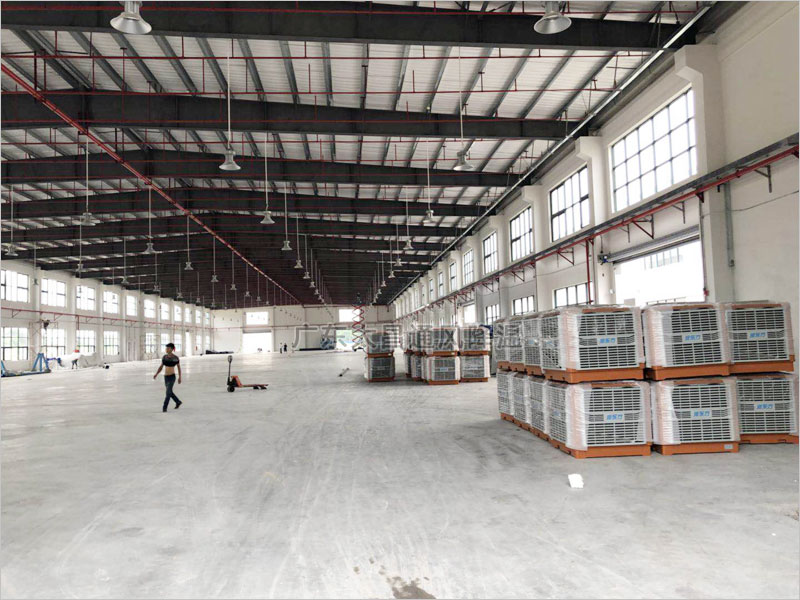
Previously, cooling tall workshops while reducing cooling costs has always been a difficult problem to solve. In response, Guangdong Ventilation and Cooling Technology Co., Ltd. has launched a fan complementary cooling method to solve this problem:
The so-called fan (industrial fan) machine (environmentally friendly air conditioner) complement each other, relying on environmentally friendly air conditioning to filter and cool the fresh outdoor air (which can lower the outdoor air temperature by 4-10 ℃), and then continuously send it indoors; Then, a large industrial fan with a diameter of 7.3 meters disperses, stirs, and evenly distributes the cold air from the environmentally friendly air conditioner in every corner of the workshop, creating a three-dimensional convection of air throughout the workshop, allowing the human skin to feel a temperature difference of 5-7 ℃, just like feeling the sea breeze after swimming; And due to the positive pressure air supply of environmentally friendly air conditioning, the heat in the workshop can be forcibly "compressed" to the outside, thereby achieving ventilation, dust removal, deodorization, and increasing the oxygen content of indoor air while cooling down.